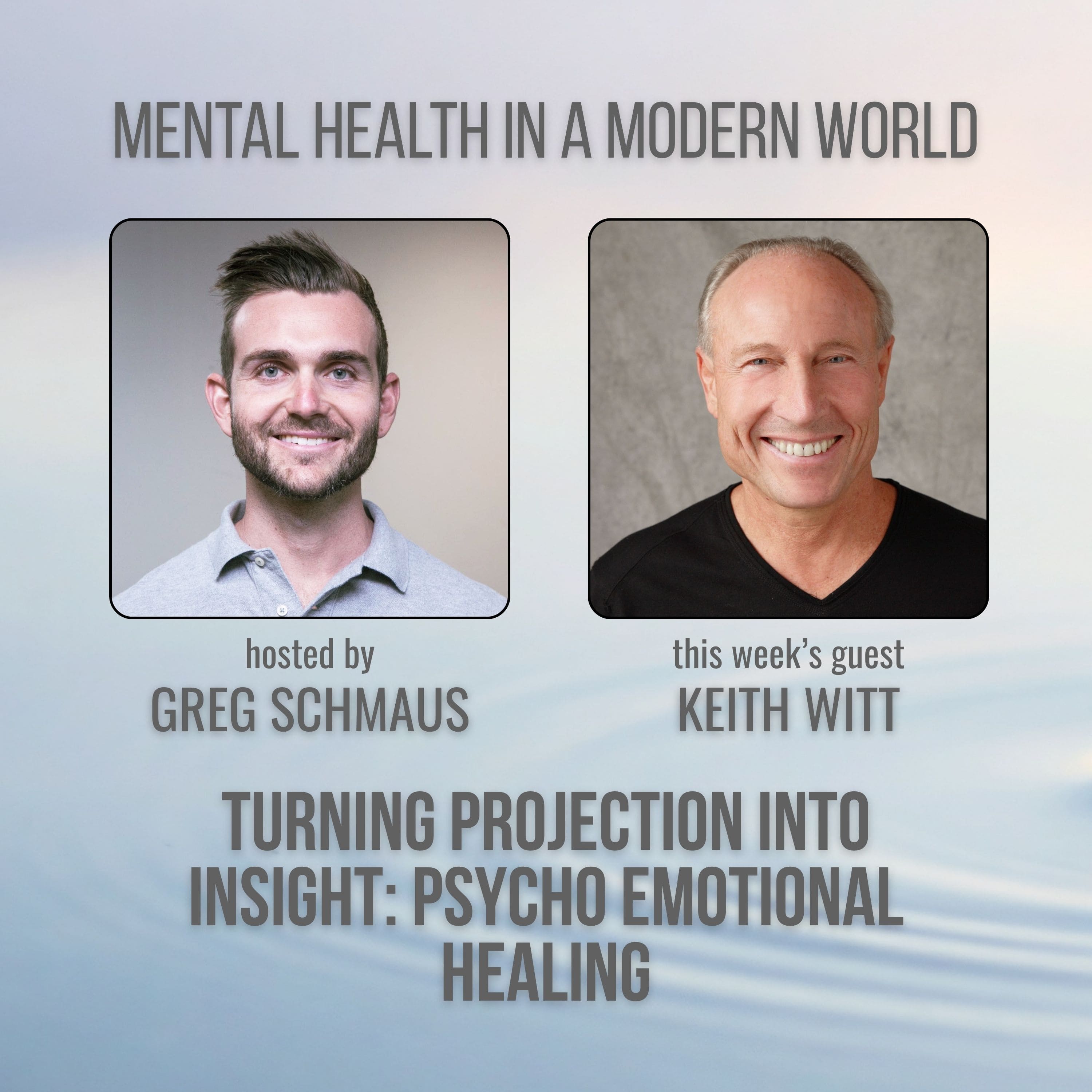
Integral Psychology: Why Everything in Your Healing Is Relational
Have you ever noticed that you feel like a different person depending on the day, the room, or who is across the table from you? One moment you are calm and kind, and the next you are defensive, sharp, or shut down. Many people assume something is wrong with them when this happens. According to Keith Witt, PhD, a psychotherapist with 53 years of clinical experience and more than 75,000 therapy sessions, it is simply how the human mind works. The real question is who is steering when it happens.
Why Everything in Mental Health Is Relational
Keith has seen one idea hold true across five decades of therapy: everything is relational. We are conceived in relationship and born into relationship. We never really grow alone.
He points to a newborn as an example. A baby can barely control any muscle except those in the face and neck, so the baby turns toward mom’s eyes. In that moment, the baby’s nervous system, stress response, and emotional regulation begin to sync with another human being. People do not move to the next level of development without a model of someone who is already there.
This matters for adults too. Isolation, endless scrolling, and shallow online contact can scratch the itch for connection without feeding the soul. We need real people.
What Is Integral Psychology?
Integral psychology comes from the work of Ken Wilber. Instead of fighting about which therapy or tradition is right, it asks a simpler question: what is the smallest number of perspectives needed to see a moment clearly?
The answer includes:
- The inside and outside of an individual, such as thoughts and feelings versus behavior and biology
- The inside and outside of groups, such as shared culture versus systems and structures
- States of consciousness, which shift from moment to moment
- Lines and stages of development, such as emotional, moral, and interpersonal growth
As Keith puts it, it is a meta-system. Almost any approach fits inside it because each one has strengths and weaknesses. Everybody gets to be right, but nobody gets to be right all the time.
Meet Your Wise Self
Here is where it gets practical. Keith explains that we all carry many selves. There is the part of you that is anxious, the part that judges, the part that wants to please, and the part that gets angry when threatened. Walt Whitman said we contain multitudes, and the research agrees.
At any moment, one of these selves is in charge. Keith calls the ideal navigator the wise self. It is both a state you can feel and a skill you can practice. You enter it when you:
- Have compassion and understanding for yourself and for others
- Notice your quick moral judgments instead of obeying them blindly
- Check those judgments against a simple standard: do good and don’t do bad
- Embody all of this in your body, not just your head
Keith defines “good” as considering what is best for the other person, what is best for you, and what a wise person would see as best for both. “Bad” is using another person for gratification, release, or profit.
Nobody lives in the wise self all the time. The goal is to spend more moments there.
Where Parts Work Fits In
Keith has deep respect for Richard Schwartz and Internal Family Systems. Many people know it as parts work. He notes that Schwartz’s idea of Self is very close to the wise self.
His point is that parts work gets stronger when you can build that center on purpose. A protector or an exile is not something to get rid of, control, or fix. It is something to respect and care for, and the best caretaker is your wise self.
This also answers a common problem. Much of what feels like authenticity is really being blended with one part. If you believe you are only one “I,” you will often be stuck inside a protector without knowing it.
Family Constellations and the Weight of Lineage
Keith also draws on the work of Bert Hellinger and family constellations. This approach rests on three foundations:
- Belonging: You were born, so you belong. Feeling that you do not is a primal wound.
- Accepting who came before: Parents do not have to be perfect, or even safe, for you to honor the life that came through them.
- Balancing giving and receiving: Healthy relationships stay in motion in both directions.
Hellinger’s insight was that some problems may not start with you. They may have roots in your lineage.
Shadow Work Made Practical
Keith has written two books on shadow, and his definition is refreshingly simple. Shadow is the entire adaptive unconscious. Your nervous system takes in hundreds of inputs every second and produces stories, impulses, and feelings in about 40 to 50 milliseconds. You become aware of them half a second to a second later.
Some of that material is helpful, and some is defensive. His approach is straightforward:
- Say yes to constructive shadow material
- Regulate destructive shadow material with compassion for yourself, compassion for others, clear thinking, and right action
Notice your own pride, anger, envy, and attachment when they show up, because they will all show up. When you see them, they lose their grip. When you don’t, they hijack you.
Don’t Heal Your Projections, Use Them
Many people try to get rid of projection. Keith suggests something different. Everything we see is partly co-created by us, so projection never fully goes away.
Instead, turn it into another sensory system. What you project onto someone becomes information, like sight or sound. It can be accurate, since people read each other quickly, and it can be about you. The shortcut is compassionate understanding of yourself and the other person.
Why Modern Life Feels So Hard
Keith describes the “dialectic of progress.” Every new capacity brings new problems. Phones, social media, and now AI offer new power, and each one also creates new pathologies we only see after the data comes in.
At the same time, modern life is fast, competitive, and stressful. He suggests we start with radical acceptance of the world we have, then get honest about what is healthy and unhealthy for us. Keep those things as objects of awareness. When people do that, they grow, even if they still feel like the same person.
Two Ways to Stay Balanced in a Fast World
Keith offers two simple practices.
Check Your Whole Life
Ask how you are doing in body, mind, and spirit, across your self, your culture and relationships, and the natural world. If one area is struggling, do something. Don’t tolerate an unhealthy process. Change it.
He notes that couples often wait about six years after problems begin before seeking help. Earlier is easier.
Find a Wise Person and Listen
Meet regularly with a skilled therapist, coach, or mentor and ask, “How am I doing?” Then listen. If they are concerned about something you are not, get curious. If they are proud of you and you don’t feel it, get curious about that too.
Key Takeaways
- Practice the wise self by bringing compassion to yourself and others, noticing your moral judgments, and checking them against “do good, don’t do bad.”
- Treat each inner part as something to respect and care for, not something to eliminate.
- Make constructive shadow material welcome, and regulate destructive material with compassion and clear action.
- Use your projections as information instead of trying to erase them.
- Check in on body, mind, spirit, self, culture, and nature, and meet regularly with a trusted guide who will tell you the truth.
Quotes
“Anytime you deny a basic truth or you deny a drive, you have corruption.”
“You don’t want to heal projections necessarily. You want to turn projections into a sensory system.”
“If there’s a problem, do something. Don’t tolerate an unhealthy process. Change it.”
Keep Exploring
If you are curious about parts work, shadow, and practical tools for a mind that feels overwhelmed, there is more to explore. Keith shares his books, classes, and lectures freely at drkeithwitt.com. To hear more conversations like this one, follow Mental Health in a Modern World on Spotify, Apple Podcasts, YouTube, or your favorite podcast platform at mentalhealthinamodernworld.com. If you want personal guidance, you can learn about working with Greg Schmaus at Healing4D.com.