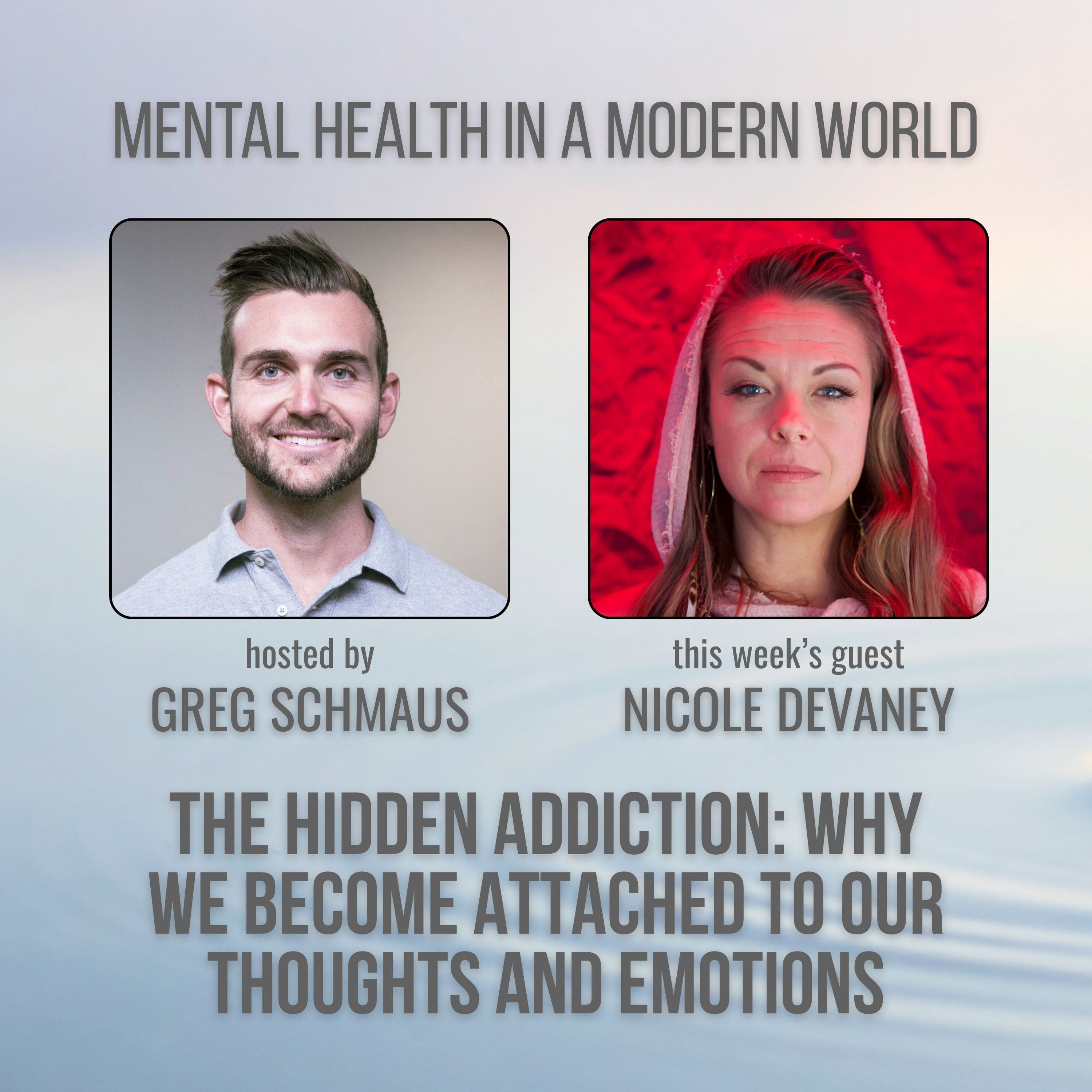
Emotional Addiction: Why We Crave Painful Feelings and How to Heal
Ever catch yourself going back to the same worry, the same resentment, or the same stressful situation, even though you know it hurts? You’re not weak, and you’re not broken. You may be caught in emotional addiction, a pattern where your mind keeps returning to what feels familiar.
Holistic practitioner and shaman Nicole DeVaney has spent 18 years helping clients untangle these patterns. Here’s what she has learned about why they form and how to loosen their grip.
What Is Emotional Addiction?
When most people hear “addiction,” they think of alcohol or drugs. But we can also become addicted to emotions and the thoughts that drive them.
It works like a loop. A thought creates a feeling. That feeling attracts experiences that match it. Those experiences give you more reasons to think the same thought, and soon the whole cycle feels normal.
Why Painful Feelings Can Feel Like Home
Many of these patterns start very early, often before age seven and even in the womb. The hormones surrounding us before birth and the emotional climate of our first years can become our definition of “home.”
That’s why a calm, peaceful life can feel strange to someone who grew up around stress.
“Chaos can feel like safety to somebody who grew up in a home of that.”
Our brains also reward us for these loops. Dopamine, the chemical that says “get it done so you can survive,” can reinforce even harsh thoughts like self-criticism and resentment. The reward is real, even when the pattern isn’t good for us.
Nicole doesn’t believe there’s a magic switch that removes these patterns forever. For her, healing is a lifelong walk of awareness. She keeps asking: “Is this the feeling I want to live in? What am I thinking? What can I learn from this?”
The Inner Critic Isn’t Your Enemy
Many of us treat the inner critic as something to silence. Nicole sees it differently. She explains that it often shows up to put things back in order when life has drifted into chaos.
For women, this can be tied to the monthly cycle. In the days before a period, the inner critic often gets louder. We can become hard on ourselves and on the people closest to us.
How to Work With Your Inner Critic
The key is to notice that the pattern is cyclical and to acknowledge it instead of spiraling. Here is the approach Nicole shares with clients:
- Write down what the critic is saying in your journal.
- Tell your partner what you’re feeling, and say that it may not be the best time to talk it through.
- Revisit the conversation a week or so later, when you feel more open.
- Ask what the critic is pointing to, then take one small action on it.
Looping down the critical path just beats you up. Acknowledging it and taking action actually helps.
Are Your Thoughts Vitamins or Medicine?
Here’s a small shift that can change how your body responds to healthy habits. Nicole points out that the reason behind an action matters as much as the action itself.
Taking a vitamin “because cancer runs in my family” keeps your attention on the thing you fear. Taking it “because it gives me energy and I love feeling good” keeps your attention on vitality.
“Our thoughts and our actions are either vitamins or they’re medicine.”
There is a time and place for treating illness. But Nicole likes to focus on actions that move toward vitality. She also suggests checking how your body feels when you think about what you want. Do your cells feel expanded and open, or tight and afraid because you don’t have it yet?
What Guilt and Shame Are Really Hiding
Nicole believes that every emotion has value, except guilt and shame that never lift. They can help us see a mistake and learn from it, but holding on to them weighs us down.
Underneath guilt, there is often something deeper. Her conversation partner shared that guilt can act as a shell protecting a well of grief that hasn’t been felt yet. Staying in guilt can feel easier than facing the sadness underneath.
Guilt can also start in childhood. A child often blames themselves because it feels safer than seeing a parent as the source of harm. Making it “my fault” protects the bond, even if it’s painful.
One helpful tool is parts work, which means “unblending and befriending.” You step back from the part of you that feels guilty or critical, get curious about it, and learn what it’s trying to protect. When a part feels understood, it often softens.
When You Remove the Numbing, Feelings Rise
Nicole shares a personal story about quitting tobacco in her early twenties. About nine months in, a wave of shame came up, tied to a childhood wound of feeling unchosen by her father. The habit had helped her keep that shame hidden.
She now sees the same pattern with clients who give up foods like gluten, which she says can numb feelings. They often return a couple of weeks later saying they hate their job, their spouse, and everything else. She celebrates, because that’s when real healing can start.
The habit isn’t the whole problem. It was covering feelings that were waiting to be felt. Give yourself time, because these emotions rise slowly.
Healing the Body and the Heart Together
From her years in practice, Nicole believes that most physical pain has emotional roots. She describes front door and back door healing. The front door is the physical and mental side, such as bodywork and movement. The back door is the emotional and spiritual side.
You can start with whichever door feels safest. Eventually, you’ll meet in the middle of the house.
She is just as clear that the body needs a strong foundation. Sunlight, sleep, nutrients, and water all help your nervous system handle deeper emotional work. If you’re stressed about next month’s rent, she says, it’s probably not the time to unpack childhood trauma.
Her approach changes with every person. Sometimes it starts with gentle exercise so someone can walk into the grocery store and buy the food that helps them feel better. Sometimes it starts with feeling the feelings. Big experiences, like group ceremonies, also work best with preparation and support afterward.
Try the Joy Gym Practice
One of Nicole’s favorite tools is called Joy Gym. Like a real gym, it works through steady repetition, not one big effort. She does it out loud on her daily dog walk, because speaking it helps your subconscious take it in.
Step 1: Radically Accept What Is
- Spend at least two minutes allowing whatever you feel to be there.
- Say it out loud, such as “I radically accept that I’m angry” or “I accept that I’m worried.”
- Breathe with the feeling and ask where it lives in your body.
This step keeps joy from turning into spiritual bypassing, which means skipping over hard feelings by only focusing on the good. The more you practice, the less time you may need.
Step 2: Speak Your Joy
- Set a two-minute timer.
- Name specific things that bring you joy, like morning light or your dog chasing squirrels.
- Stay with the feeling as you say each one.
- If you’re with a friend, they can reply, “Seeing your joy brings me joy.”
Nicole describes this as a way to rewire the brain to look for love. Your attention is moving into a different part of the brain than the one that feels pain. Spend more time in the joy room, and the anger room gets dusty.
Key Takeaways
- Painful thought and emotion loops often feel familiar, which is why they feel safe. Awareness is the first step to changing them.
- Your inner critic can be a signal to pause and reset, not a reason to beat yourself up.
- The intention behind your habits matters. Choose actions that move you toward vitality, not just away from fear.
- Guilt and shame often protect grief. Befriending those parts can help them soften.
- Joy is a muscle. A few minutes of radical acceptance and spoken joy each day can change your patterns over time.
Let Your Heart Lead the Way
Nicole leaves us with a simple reminder that your heart is a compass, and all the parts of you live inside it.
“Allowing yourself a little bit of space each day to ask what your heart would love from today and to find a way to take action on it has more medicine than all the podcasts and books and shamans I’ve ever visited.”
If you want to go deeper, you can work with Nicole through her website, The How To Healer (nicoledevaney.com), which offers both long-term coaching and one-time healing sessions. You can also find her on Instagram at NicoleTheCzechGoddess.
If this article spoke to you, explore more conversations on mental health and holistic healing, and subscribe so you never miss a new one. This content is for educational purposes and isn’t a substitute for professional medical or mental health care.