Finding Purpose in the Age of AI: Why Inner Peace Comes First
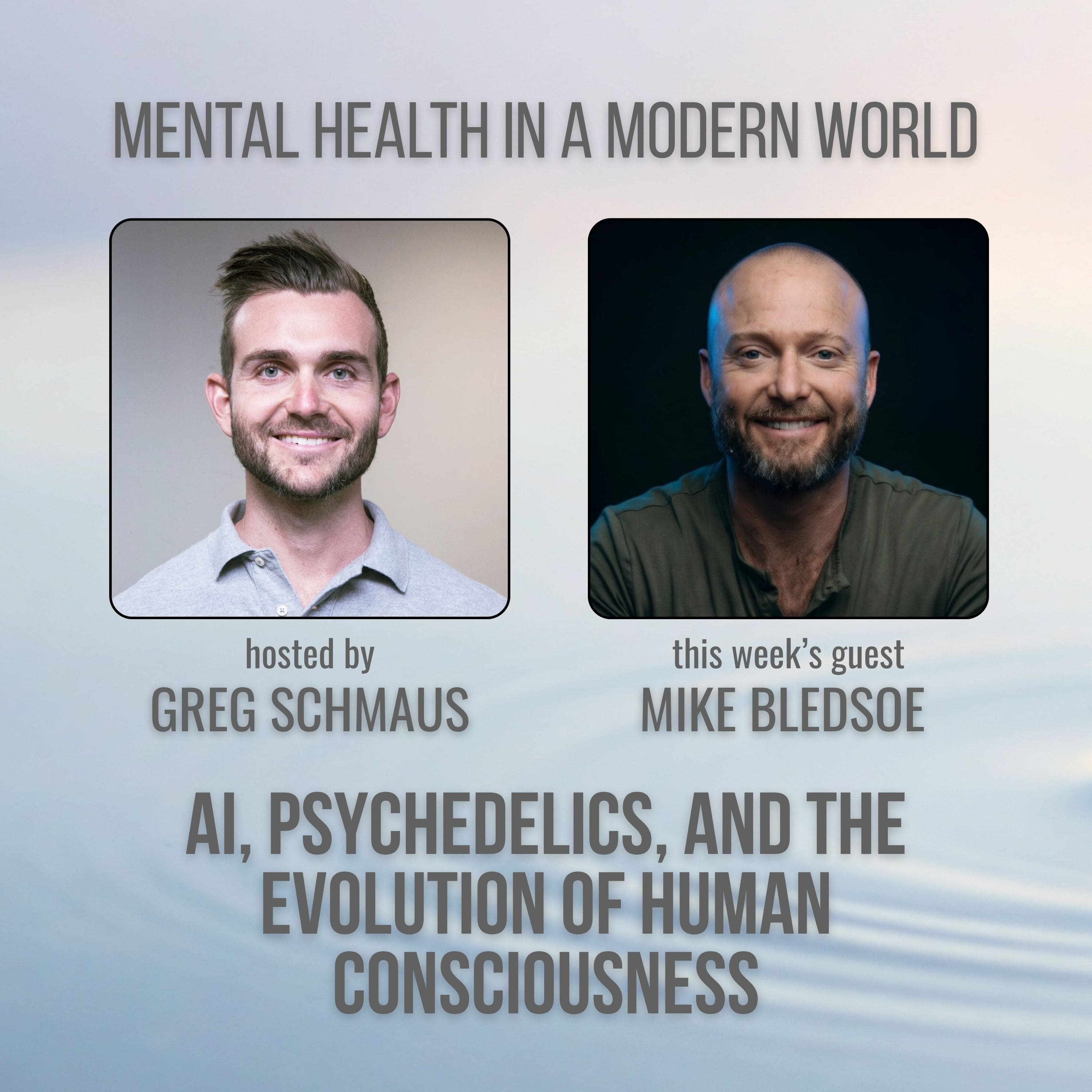
Have you ever felt like you are supposed to have a big life purpose, but you have no idea what it is? You are not alone. In a world full of endless options and fast-moving technology, the pressure to “find your purpose” can feel heavy. It can even leave you feeling worse. In a candid conversation on Mental Health in a Modern World, host Greg Schmaus and guest Mike Bledsoe explore a different path. Their message is simple and freeing. Purpose may be less about what you do and more about how you show up.
Why Purpose Became Such a Big Question
For most of human history, people didn’t ask about purpose. They were busy surviving. Purpose might have meant taking out the trash in the next hour or getting food on the table.
Today, many of us have a baseline of safety and comfort. That’s where Maslow’s hierarchy of needs comes in. Once the basics are covered, the mind starts asking bigger questions about meaning and fulfillment.
Think of it like a building with several floors. The foundation of safety has to be in place before the upper floors can come online. Purpose is one of those upper floors.
Is the Search for Purpose a Double-Edged Sword?
Some traditional healers say they have no word for depression in their communities. That raises a fair question. Could the modern pressure to have a purpose be adding to our suffering?
When purpose becomes a constant cultural conversation, it’s easy to wonder, “Am I supposed to have one?” That wondering can quietly feed feelings of being behind or not enough.
When Chasing Purpose Backfires
Mike Bledsoe built a large online following teaching fitness and business. People assumed he had found his life’s purpose. He didn’t feel that way. Then he started chasing something bigger.
He made poor business decisions trying to move beyond what he saw as “just” fitness and business. His ego wanted others to see him as living a grand mission. Even when people told him his work changed their lives, it felt the same as helping someone add weight to their squat.
That experience pointed to a few lessons:
- Purpose is a sense, not a statement. A mission can be written down. A sense of purpose is felt in the moment.
- The ego often wants purpose to look impressive. The heart doesn’t need the label.
- Helping people always feels like helping people, whatever the packaging.
Years later, a shift came from an unexpected place. When his wife became pregnant, his sense of purpose narrowed and sharpened. The “change the world” language started to feel a little silly.
It’s Not What You’re Doing. It’s How You’re Doing It.
Many of us carry a quiet belief that we’re not enough unless we’re doing something extraordinary. That can build a kind of savior complex, where worth depends on how much we achieve.
Try flipping the question. Instead of asking, “What should I do with my life?” ask, “What energy am I bringing to this moment?”
The Zen answer to “What is my purpose?” is simple. Whatever you’re doing right now.
Some of the best moments in life never come from a plan. They happen because you’re enjoying where you are. That enjoyment draws in people who feel the same way, and doors open from there.
Create Your Experience Instead of Waiting for It
Picture this. It’s 11 p.m. and your home’s main water line backs up, leaving you standing in ankle-deep sewage. Not exactly a joyful moment.
Yet even in that chaos, there can be a small spark of joy. That’s the point. You can generate a feeling inside you no matter what’s happening outside.
In archetypal work, this is the difference between two stances:
- The victim believes the circumstance creates their experience.
- The master believes they create their experience in each circumstance.
Two simple questions can help you shift:
- Is this worth my peace?
- Is God experiencing this right now? (Usually the answer is no. It’s just your small self throwing a tantrum.)
Stop Outsourcing Your Validation
Where does the habit of looking outside ourselves for approval start? Often, it starts early. When a parent says “Good job” over and over, a child learns to check outside themselves to know if they did well.
Some parenting approaches suggest a different path. Ask the child how they feel about what they did. Say, “You must feel really proud,” instead of “I’m proud of you.”
Adults can do the same thing. Before bed, ask yourself, “What am I proud of today that maybe no one noticed?” It’s a simple way to rebuild your connection to your own inner voice.
Purpose in the Age of AI
Technology is changing work faster than most of us expected. When AI became agentic, meaning it could carry out tasks and not just chat, Mike went through two weeks of nihilism. If AI can solve problems faster than humans, does his work matter?
He came out of it with a clear insight. Right now may be the worst time in history to tie your purpose to your job title.
The people most likely to thrive are the ones who can adapt their identity. That means holding labels lightly:
- Right now I’m a husband.
- Right now I’m a dad.
- Right now I’m playing the role of CEO.
Like an actor in a play, you can show up fully and still have fun without becoming the role.
How to Use AI Without Losing Your Inner Guidance
A real concern is that people will hand their decisions to AI and lose touch with their own heart and intuition. So how do you use it without unplugging from yourself?
Mike’s approach is to treat AI the way you’d treat any expert. A few habits help:
- Use it to gather information, not to make the decision for you.
- Ask where the information came from, and request citations.
- Question it like a scientist or lawyer would.
- Notice if it’s hijacking your nervous system, your emotions, or your relationships.
How you relate to AI often mirrors how you relate to authority in general. If you tend to treat doctors as unquestionable, you might do the same with a chatbot. The answer is to stay curious and keep your own judgment in the loop.
Used this way, AI can be an incredible teacher. It meets you at your level and gives you the next step, unlike a classroom built for the average student. It’s also not a one-way street. Mike noticed that working this way made him more thorough and less impulsive, so the tool shapes the person using it too.
Bringing Ancient and Modern Wisdom Together
Mike has done hundreds of psychedelic journeys. He says those experiences of the world collapsing and being rebuilt prepared him for the instability of this moment. Others may be panicking about rapid change, while it feels strangely familiar to him.
He’s also pulled back from that work while he and his wife expect their baby. He wants to stay in sync with her and build his energy. At the same time, he sings in a sweat lodge one day and builds AI systems the next. To him, ancient and modern tools are both beautiful, and he doesn’t have to choose one over the other.
That’s the path of integration. It’s not left or right, old or new. It’s both, held with care.
Key Takeaways
- Let go of the pressure to find your one big purpose. Purpose is a felt sense in the moment, not a statement you have to write down.
- Focus on how you show up. The energy and intention you bring matter more than the task.
- Create your experience from the inside. Ask, “Is this worth my peace?” when circumstances push your buttons.
- Hold your identity loosely. In a fast-changing world, the most adaptable people aren’t attached to a single career label.
- Use AI as a tool, not an authority. Ask for sources, think critically, and keep your inner guidance in charge.
Words Worth Remembering
“The true purpose is really like, can I find joy in this moment outside of the circumstance?”
“Ideally, you wanna be able to be so fluid in your identity that you’re just, ‘This is who I am right now.’”
“Can any one person go out and save the world? No, but you can save your world.”
Final Thought
If you want a more peaceful world, start with the peace inside you. Wherever your passion lives, pursue it. There has never been a better time to try.
Want to keep exploring mental health, healing, and personal transformation? Browse more articles, subscribe to stay in the loop, or reach out to work with Greg directly.